

Two guests check into identical rooms on the same corridor. One finds a generic welcome; the other finds their preferred sparkling water chilled in the minibar, a firm pillow already on the bed because that is what they asked for last time, and a note acknowledging the anniversary they mentioned at booking. Both rooms cost the same to run. Only one creates a story the guest will tell — and a booking they will repeat.
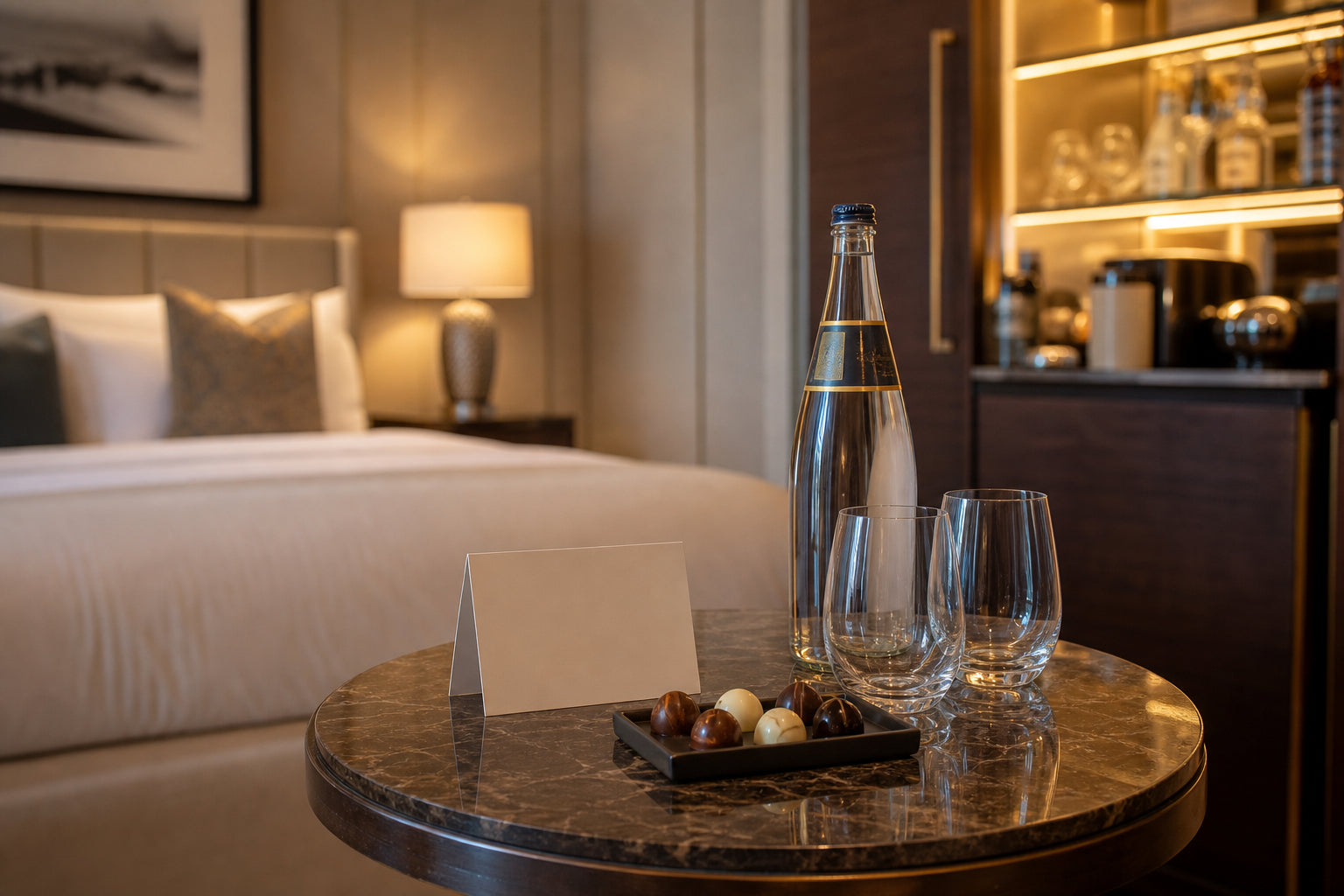
Personalisation is often described as the future of luxury hospitality, but at the top end it is simply the present: guests who pay five-star rates increasingly expect to be known, not merely accommodated. The interesting question for operators is not whether to personalise but how to do it repeatably — across hundreds of rooms, changing teams and thousands of guest profiles — without the wheels coming off. This article looks at what personalised in-room amenities actually involve, and the operational machinery that makes them dependable rather than occasional.
Why personalisation lands harder than luxury itself
A beautiful room impresses; a room prepared for you connects. The psychology is straightforward — being remembered signals status and care in a way that thread counts cannot. Commercially, the effect shows up in three places:
- Reviews. Personal touches are disproportionately mentioned in guest feedback because they are narratable — "they remembered", "they had thought of everything" — while generic quality is merely expected at this level.
- Loyalty. A guest whose preferences are on file has a reason to return to your property specifically: elsewhere, they start from zero.
- Revenue quality. Recognised guests book direct more often, extend stays more readily and are more receptive to upgrades and in-room offers tailored to what they actually like.
The catch is that personalisation raises the stakes. Promise recognition and then serve a guest their stated allergy in the welcome amenity, and the failure is worse than never trying. That is why the operational layer matters more than the gesture itself.
The personalisation toolkit: what luxury hotels actually tailor
In practice, in-room personalisation clusters around a handful of touchpoints that housekeeping and guest relations can reliably control:
- The welcome amenity. The classic fruit plate has given way to tailored gestures: a local treat for a first-time visitor, a favourite wine for a returning one, a child's welcome pack for families, dietary-appropriate alternatives prepared without being asked.
- Minibar and refreshment curation. The minibar is one of the most flexible personalisation tools in the room — stocked to a guest's stated preferences, adjusted for dietary needs, or pre-loaded with a celebration setup. This only works when the appliance itself is reliable and consistently chilled; a curated selection in a warm or noisy minibar defeats the purpose.
- Sleep preferences. Pillow type, duvet weight, extra blankets, room temperature set before arrival — small database entries that translate into a materially better night.
- The hospitality tray. A guest's preferred tea or coffee waiting beside the kettle costs pennies and reads as genuine attention. Decaffeinated options, herbal selections and fresh milk preferences all personalise easily.
- Practical anticipation. An ironing board already set up for the guest who pressed a suit last visit; adaptors for the guest who always forgets one; the room safe left open with instructions for a first-time guest.
- Occasion recognition. Anniversaries, birthdays and milestone trips flagged at booking and acknowledged in the room — the highest-impact, lowest-cost gesture in the toolkit.
The system behind the gesture
Every hotel can personalise once. Doing it for every eligible guest, every day, requires a pipeline that most properties underestimate:
- Capture. Preferences gathered at every touchpoint — booking questions, pre-arrival emails, requests during previous stays, conversations noted by staff — and entered into the guest profile as a matter of routine, not enthusiasm.
- Storage and access. A single guest profile in the property-management or CRM system that housekeeping, food and beverage and front office can all read, with data handled lawfully and transparently under UK data-protection rules.
- Translation into tasks. The step most programmes fumble: preferences must become items on tomorrow's housekeeping and room-setup sheets automatically, room by room, before each arrival.
- Verification. A named person checks personalised setups before arrival, because a wrong personalisation is worse than none.
- Feedback loop. What guests used, ignored or mentioned goes back into the profile, so personalisation sharpens with every stay.
Equipment as the foundation of personalisation
It is easy to think of personalisation as purely a service skill, but the physical room sets its limits. A property cannot curate minibar contents per guest if half its minibars cool unevenly or rattle through the night. It cannot promise a perfect first cup of the guest's preferred tea if the kettles are slow and scaled. It cannot invite guests to store valuables with confidence if the safes are fiddly or too small for a laptop.
Luxury properties therefore standardise the equipment layer precisely so the contents can vary:
- Silent, consistent minibars in every room, so curation is only ever a stocking decision.
- Fast, well-maintained kettles and generous tray space, so preference-based tea and coffee setups slot in without redesign.
- Uniform safes, hair dryers and irons across the estate, so staff instructions and guest expectations never depend on which room was allocated.
Standard equipment, variable contents: that is the formula that lets a 200-room property personalise like a townhouse. Operators building this foundation can review specifications across our Roomwell guest-room range.
Getting the tone right: personal, not intrusive
There is a line between "they remembered me" and "they have been watching me", and luxury guests are sensitive to it. A few principles keep programmes on the right side:
- Personalise from information the guest knowingly gave — requests, booking notes, stated preferences — rather than inferences that may feel surveillant.
- Prefer quiet usefulness to conspicuous display. The right pillow simply being on the bed beats a card announcing that preferences were consulted.
- Make it easy to opt out or update preferences, and honour changes immediately.
- Train teams to note preferences discreetly and never to reference personal details in front of other guests.
Starting small and scaling honestly
The strongest programmes begin narrow: pick two or three touchpoints — say, pillow preferences, minibar requests and occasion recognition — and execute them flawlessly for every guest who qualifies, before widening the menu. A limited promise kept beats an ambitious one missed, and each cycle builds both the data and the habits the next layer needs.
Personalisation, done this way, is less a grand strategy than a compounding discipline: capture what guests tell you, act on it visibly, and make sure the room's equipment never lets the gesture down. The properties that master it earn something rate cards cannot buy — guests who feel the hotel is partly theirs.
Quick answer: Personalisation is the signature of luxury service — but it only works when the operation behind it is systematic. Here is how leading hotels turn guest preferences into in-room amenities that build loyalty.
Benefits
- Protects guest sleep with quieter cooling in the room.
- Supports higher review scores linked to rest and comfort.
- Gives operators a clear specification choice (absorption vs compressor).
- Improves perceived luxury when stock presentation is clean and chilled.
Features
- Quiet cooling technology suited to bedside or cabinet placement.
- Solid or glass door options for brand presentation standards.
- Capacities matched to room type rather than one estate-wide default.
- Hotel-grade build for continuous hospitality duty cycles.
Frequently asked questions
Why do silent minibars matter for hotel reviews?
Because noise at night is a common complaint. A quieter unit protects sleep and reduces negative comments about humming fridges.
Is absorption better than compressor for guest rooms?
For most UK guest rooms, absorption is preferred for near-silent operation. Compressor units suit warmer loads or non-sleep spaces.
What should operators check when installing a minibar?
Ventilation clearances, level fit, door finish, capacity by room type, and that the unit does not rattle against cabinetry.
Do guests expect a stocked minibar in every hotel?
Expectations rise with star level. Mid-scale rooms often use an empty fridge; luxury rooms more often stock a quiet chilled minibar.
Roomwell supplies the dependable in-room foundation that personalisation is built on — silent minibars, kettles and hospitality equipment, digital safes and guest-room appliances — to hotels across the UK. Explore the range in our Roomwell products collection, or contact our team to standardise the equipment layer across your estate.